



Building People Skills
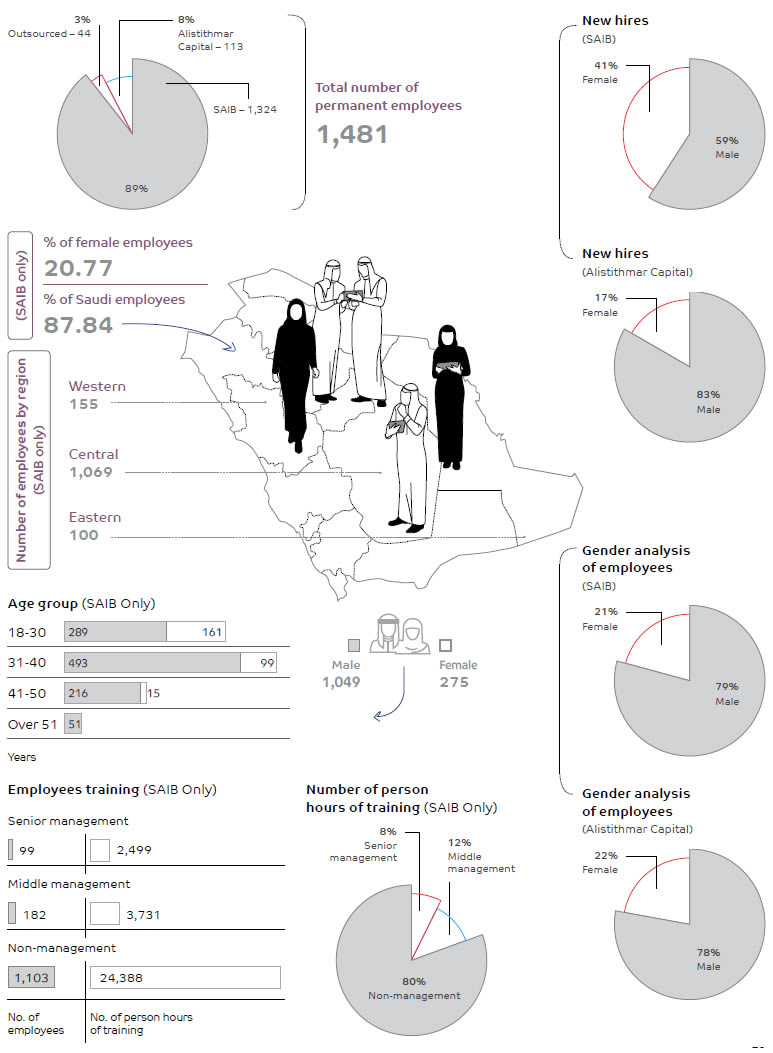
SAIB'S human resources planning strategy is tied to business strategies and a demand and supply analysis. The demand aspect is determined by staffing requirements which are derived from business needs at business unit levels. The supply aspect is determined by the availability of people in the market that are suitable for various roles and the possibility of training and development of existing employees to fill in gaps.
GRI 103-1, 103-2, 103-3, 401-1, 405-1
The human resource planning strategy of the Bank is closely aligned with overall business strategies and adapts as necessary to the operating environment. HR planning is based on a demand and supply basis: demand is determined by evaluating business needs in terms of numbers and roles at organization unit levels, and supply is evaluated by analyzing the availability of people by functions and levels, and how gaps can be filled through staff development and training.
Strategic Plan 2015-2019: Objectives for developing human resources
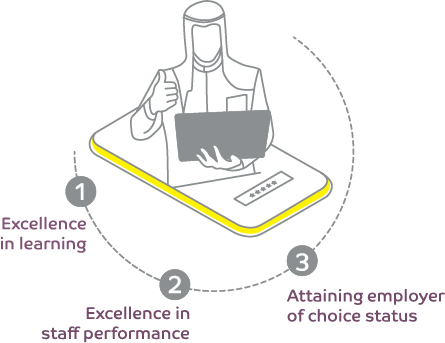
During 2015-2019, three objectives were identified for developing human resources along with several initiatives such as recruitment and training for new teams and focus areas, evaluation of centralising incentive schemes under HR, management succession plans, and training in focus areas such as cross selling.
A new strategy was developed for the Bank for the next three years, bringing along with it new business objectives and a new approach to achieving those objectives. Accordingly, the primary focus for the HR function in 2019 was to realign the HR strategy to the new strategy going forward, while also factoring in market forces, digitisation, and demographics. Emphasis was placed on employing people with special needs and ensuring that the work environment could accommodate their needs.
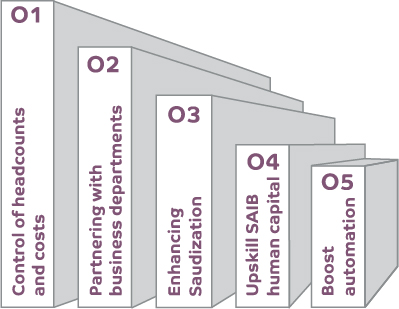
Control of headcounts and costs
The Bank strives to limit headcount while maximizing efficiency. Under the new strategy, revised manpower utilisation plans and department restructuring are a major focus that encourages internal mobility and the provision of a wider range of trainings. A controlled cost approach has been adopted with the support of the Finance Department.
| Type | 2019 | 2018 |
| Headcount* | 1,481 | 1,581 |
| Total salaries and employee related expenses (SAR ’000) | 626,327 | 625,991 |
*Includes 44 outsourced employees.
Partnering with Business Departments
Collaboration and communication were a key focus for HR in 2019. Cooperating with Business Departments prior to planning new strategy alignments is crucial to evaluating its impact on the department in terms of restructuring, cost, mobility, and new hires.
Enhancing Saudization
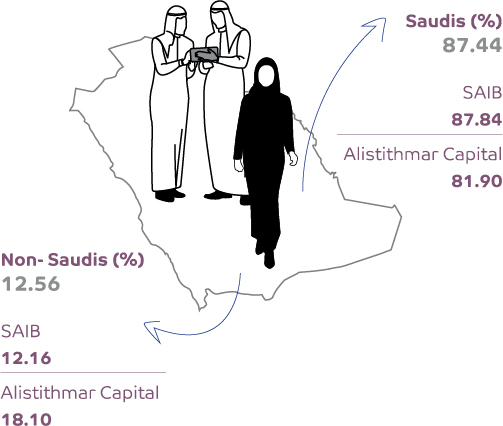
The Bank continues to drive efforts to attract and retain Saudi nationals through training and development and making the Bank a more attractive place to work. The Graduate Development Programme contributed to Saudization with the hiring of 13 highly qualified young Saudi nationals. The Bank’s Learning and Development Unit also supports the Bank in the successful training of Saudi nationals, promoting productivity and efficiency.
GRI 103-1, 103-2, 103-3, 404-1, 404-2, 404-3, 405-1, 405-2, 412-2
Upskill SAIB human capital
SAIB has long given the highest importance to developing its human capital to fulfil its goals, objectives, and plans. The Bank’s new strategy calls for the upskilling of current employees across all levels. To achieve this, e-learning doubled in 2019 and formal training increased by 66% for males and 34% for females. Overall, 4,543 training days were delivered in 2019, a 20% increase over 2018.
Boost automation
Automation is one of the key strategies the Bank is utilising to build its competitive advantage and boost the efficiency of its HR manpower. HR continued to automate HR processes during the year to improve internal employee experience, increase efficiency, and reduce human error. Over 40 HR processes were automated in 2019.
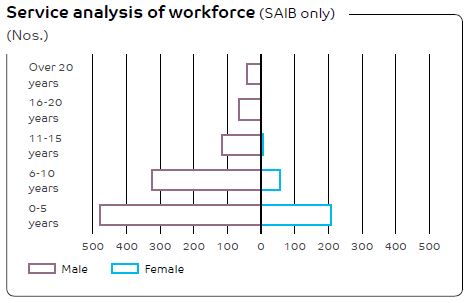
SAIB is committed to engaging more females in its workforce. Employment of females increased to 20.77% in 2019, with female representation in Senior Management standing at 6.25% and 14% in middle management. The Bank promotes equal opportunity in pay structures and no gender differentiation in salary or benefits. Two of the Bank’s female staff members were nominated for the “Women Leaders 2030” programme, a government initiative to empower women and develop their leadership skills in management positions.
| Male:Female salary ratio | 2019 | 2018 | 2017 | 2016 | 2015 |
| Senior management | 1:0.72 | 1:0.93 | 1:0.55 | 1:0.69 | 1:0.78 |
| Middle management | 1:0.89 | 1:0.83 | 1:0.76 | 1:0.86 | 1:0.96 |
| Non-management | 1:0.91 | 1:0.91 | 1:0.86 | 1:0.96 | 1:0.96 |
SAIB places an emphasis on training and development, particularly with regard to succession planning: The Bank identifies the training requirements of Saudis who will assume leadership positions in the future and provides them with the necessary training. Of total staff trained, 97% were Saudi. During the year under review, employees were provided with a total of 30,618 formal training hours across 239 training programmes, where 947 male employees and 437 female employees underwent training. The Bank also partnered with more e-learning partners to significantly increase the amount of eLearning modules from 208 in 2018 to 1,261 modules in 2019.
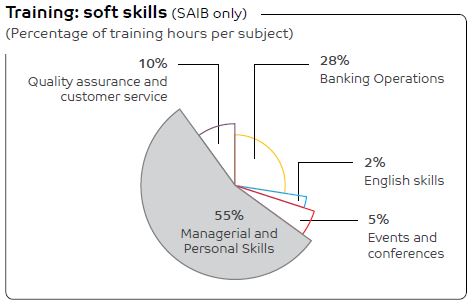
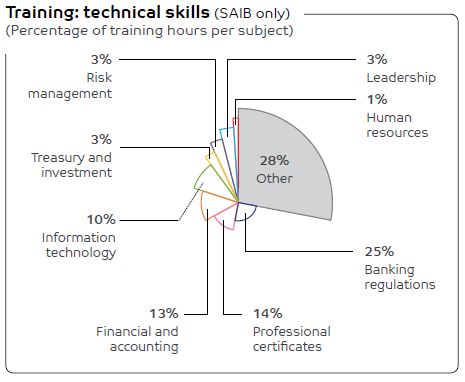
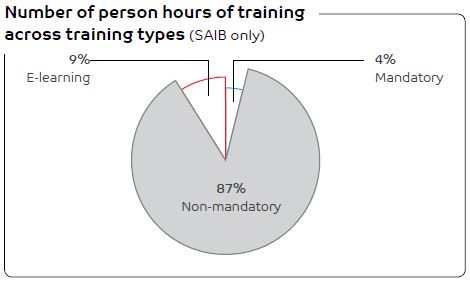
A total of SAR 626 million was spent on salaries and benefits in 2019. Salaries accounted for 72.6% of the overall expenditure, benefits and insurance accounted for 22.8%, and social security contributions accounted for the remaining 4.6%.
| SAR Million | 2019 | 2018 | 2017 | 2016 | 2015 |
| Salaries paid | 454 | 452 | 386 | 274 | 254 |
| Benefits paid | 116 | 118 | 118 | 267 | 316 |
| Social security contributions | 29 | 31 | 51 | 28 | 27 |
| Staff insurance | 27 | 25 | 24 | 23 | 22 |
| Total salaries and benefits paid | 626 | 626 | 579 | 592 | 619 |
SAIB provides basic remuneration to its employees that are competitive with market rates. Additionally, the Bank provides benefits such as life insurance, medical insurance, fitness club membership, social security, loyalty programmes, and allowances for housing and transportation. Female staff members are provided assistance wherever possible to help them balance their work and family responsibilities, including paid maternity leave up to 10 weeks and up to 180 days of sick leave for pregnant women.
| Male | Female | |
| Number of employees who took parental leave | 2 | 81 |
| Number of employees who returned to work after parental leave | 0 | 93 |
| Number of employees who returned to work after parental leave who were still employed 12 months after return | 29 | 93 |
| The return to work and retention rates of employees who returned to work after parental leave ended | 29 | 93 |
The Bank also provides employees with long-term benefits. Benefits which employees are entitled to during their tenure or at the conclusion of it are accrued according to Saudi Arabian labour regulations or the Bank’s accounting policies. An SAR 38.4 million provision was made for employee end of service benefits during the year ended December 31, 2019. The balance of accrued benefits outstanding at the end of the year was SAR 174.5 million.
The Bank grants to its eligible employees other types of security and savings plans that are based on mutual contributions by the Bank and the employees. These contributions are paid to the participating employees at the respective maturity date of each plan. All payments were completed during the year and there are no outstanding amounts as of December 31, 2019. The amount of provision made during the year ended December 31, 2019 for these plans was approximately SAR 5 million.
The Bank considers the non-monetary aspect of motivation and retention and understands that job satisfaction is an important factor. To avoid employees becoming discontent in their career, which could possibly lead to frustration and absenteeism, SAIB has a job rotation policy that gives employees the opportunity to change jobs and gain new knowledge, skills, and gain a broader view of the Bank’s operations. The policy has the additional benefit for the Bank to rotate staff in certain critical areas periodically to mitigate risk.
GRI 103-1, 103-2, 103-3, 403-2
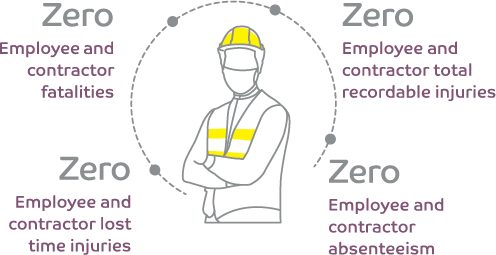
SAIB takes every measure possible to protect the health and safety of its employees as part of its commitment to staff. The Bank’s policies around security and safety are reinforced through branch inspections, safety sessions, and awareness programmes. During the year under review, no fatalities or injuries occurred and no absenteeism due to work-related health issues took place.
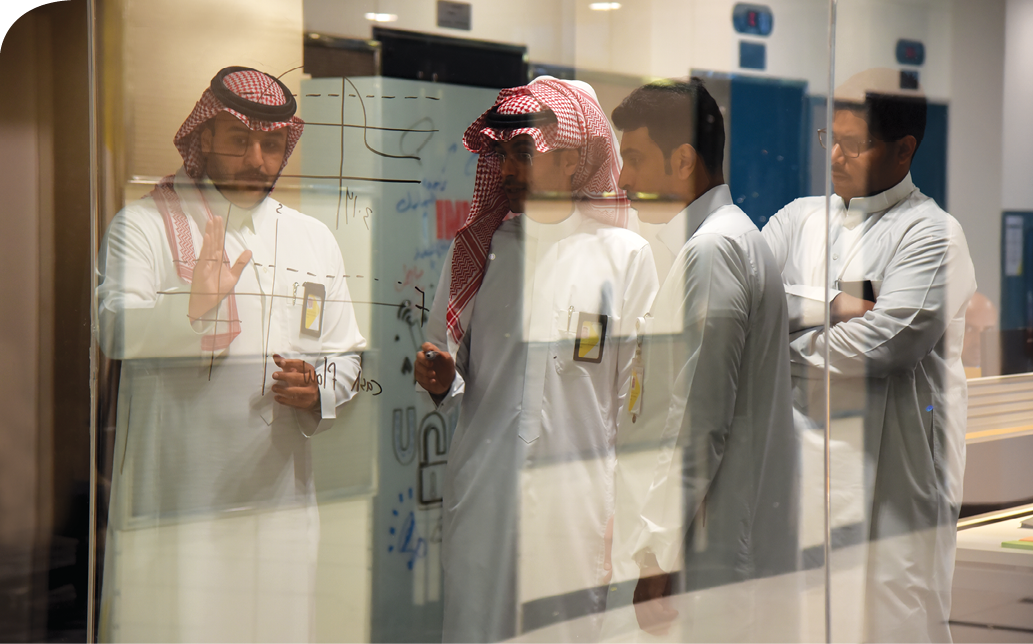
SAIB strives to engage with its employees in a meaningful way that contributes to their motivation, satisfaction, and retention. We believe that happy employees make for better employees; the appointment of the Chief Happiness Officer reaffirms to employees that they matter to the Bank. Furthermore, an engagement officer was hired to be in charge of all engagement activities within the Bank and together with the Corporate Communications team, the HR function organized several events and employee activities that focused on themes such as the Saudi National Day, Children’s Day, International Coffee Day, Alzheimer’s Disease, and Breast Cancer Awareness. The Bank maintains an open dialogue between Management and staff. A biennial employee satisfaction survey helps the Bank to understand how employees perceive their working environment and their satisfaction with performance appraisal, pay and benefits, work processes, communication, and customer focus. A suggestion programme, “My Idea”, allows employees to suggest ideas to the Bank’s innovation centre for consideration.