


Materiality
SAIB strives to create value in the short, medium, and long term for itself and its stakeholders. The process of value creation is a two-way process, wherein the Bank delivers value to its stakeholders as well as derives value from them. The process must be considered within the context of the Bank’s operating environment and the needs and priorities of its stakeholders.
The topics that have the most impact on the Bank’s value creation process have been identified through a multi-step process. The first step of the process was a PESTEL analysis of potential material issues categorized under the stakeholder group on which they have the most impact, as shown in the following table.
| Stakeholders | Political |
Economic |
Social |
Technological |
Environmental |
Legal/Regulatory |
|
| Investors/ Shareholders |
Economic slowdown | Growing influence of social media | Unorthodox competition | IFRS 9 | |||
| Depreciating currencies against USD | Basel III | ||||||
| Expected growth in the Saudi economy | Higher regulatory capital |
|
|||||
| Financial system stability | Governance and accountability |
|
|||||
| Customers
|
Propensity to invest in Saudi Arabia | Increasing customer expectations (especially in the younger generation) | Cloud computing | Adherence to Islamic banking principles |
|
||
| Corporates are de-leveraging | Customer trust and protection | e-onboarding |
|
||||
| Increase in non-performing loans | Quality of service and customer satisfaction | Digitalization and automation |
|
||||
| New parallel stock market being set up for MSMEs | Engaging with customers | Innovation and product development | |||||
| Higher oil prices | AI, Robotics | ||||||
| Higher percentage of short-term loans | Blockchain | ||||||
| Cybersecurity threats | |||||||
| Infrastructure and accessibility |
|
||||||
| Data security |
|
||||||
| Employees
|
Employee productivity | Technology driving change in job skills | Human and labour rights |
|
|||
| Staff retention | Operational efficiency |
|
|||||
| Saudization |
|
||||||
| Employee satisfaction and engagement |
|
||||||
| Staff training |
|
||||||
| Soft skills development |
|
||||||
| Equal opportunity and anti-discrimination |
|
||||||
| Community and the environment
|
Geopolitical conflicts | Need to commit to Sustainable Development Goals | Reduction of environmental impact of operations | ESG risk in lending and investment |
|
||
| Higher spending power in local population | Increasing demand for green banking and green lending | Compliance with regulations |
|
||||
| Community investment and engagement |
|
||||||
| Business partners/ Suppliers
|
Sustainable procurement |
|
|||||
| Strengthening relationship |
|
||||||
| Government/ Policymakers
|
Expected increase in non-oil revenue |
|
|||||
| Slow growth in economic integration in the GCC |
|
||||||
| Growth of MSME sector being part of the Vision 2030 goals |
|
||||||
| Diversification of the economy being one of the Vision 2030 goals |
|
||||||
| Regulators
|
Business ethics and prevention of financial crime |
|


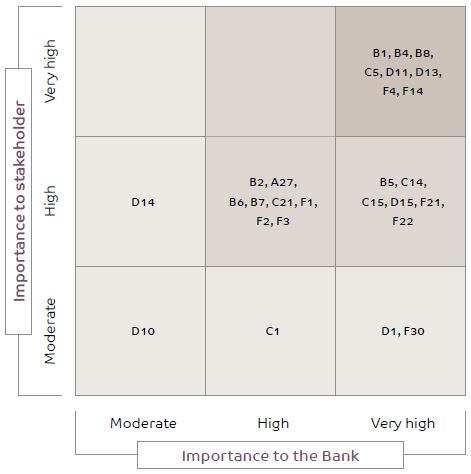
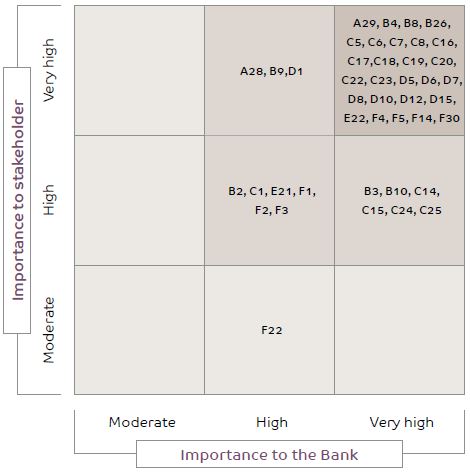
The next step of the process was to map the topics that have the most impact on the stakeholders and/or SAIB. The topics have been categorized as risks or opportunities or both.
The degree of materiality of importance of a topic is assessed according to its relevance to SAIB or the stakeholder and its significance, as determined by the probability of its occurrence and the magnitude of its impact. Material risks and opportunities are further analyzed to determine whether they are of high, moderate, or low importance to the Bank and its stakeholders.
The outcomes of the materiality analysis contributed to the formulation of the Bank’s strategies and strategic imperatives.
Management approach
Material topics are managed in accordance with the Bank’s strategic plan and responsibilities are assigned to the respective functional unit heads as per the Organization’s structure. The degree of materiality of a risk or opportunity will be a guideline for resource allocation. Accordingly, the Bank has designed and implemented several policies relevant to material topics to guide its employees in conducting their duties.
Opportunities to be seized
Risks to be mitigated